Human-Elephant Coexistence
A Future Where People and Wildlife Thrive Together
Across Kenya, elephants are an important part of our natural heritage. They shape ecosystems, support biodiversity, and contribute to the health of the landscapes they call home. But as human settlements and wildlife habitats increasingly overlap, communities can face difficult challenges when elephants move through farms, water sources, and residential areas.
At Osotua Community Based Organization, we believe that protecting wildlife must go hand in hand with supporting the people who share their landscapes.
Living Alongside Wildlife
Human-elephant conflict can occur when elephants leave protected or natural areas in search of food and water. Crops may be damaged, property can be affected, and encounters between people and elephants can sometimes put both communities and animals at risk.
For communities living close to wildlife areas, coexistence is not simply an environmental issue. It is part of everyday life.
That is why conservation efforts need to listen to and involve local communities. When people have the knowledge, resources, and support to protect both their livelihoods and wildlife, coexistence becomes more achievable.
Caring for Elephants in Need
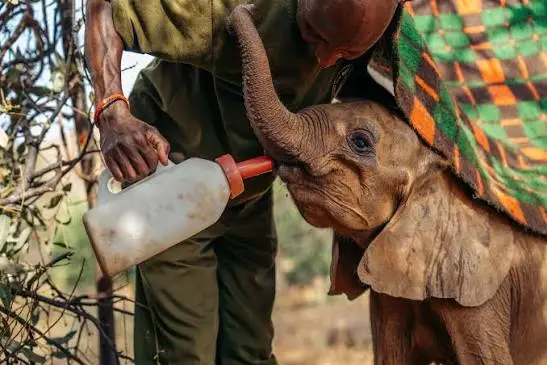
Sometimes young elephants are separated from their mothers or found in situations where they cannot survive on their own. During these difficult moments, trained wildlife teams and conservation partners can provide emergency care while efforts are made to ensure the animal receives the best possible chance of survival.
A simple act of care—such as providing milk to a vulnerable calf—can represent something much bigger: a commitment to protecting Kenya’s wildlife for generations to come.
But elephant conservation is about more than rescuing individual animals. Long-term conservation depends on protecting habitats, reducing conflict, educating communities, and creating solutions that work for both people and wildlife.
Communities Are at the Heart of Conservation
Sustainable conservation cannot happen without the people who live alongside wildlife.
Through community engagement and environmental awareness, we can help build understanding of wildlife behavior, encourage responsible stewardship of natural resources, and promote practical approaches to reducing human-wildlife conflict.
When communities see tangible benefits from conservation and have a voice in decisions affecting their environment, they become powerful partners in protecting wildlife.
A Shared Future
Human-elephant coexistence will not always be easy. It requires patience, cooperation, education, and long-term commitment. There is no single solution that works everywhere.
What matters is continuing to build bridges between communities and conservation efforts—because the future of Kenya’s wildlife and the wellbeing of its people are deeply connected.
At Osotua Community Based Organization, we believe that conservation is strongest when communities are part of the solution.
Together, we can work toward a future where elephants can continue to roam Kenya’s landscapes and communities can thrive alongside them.
People and wildlife. One shared landscape. One shared future.